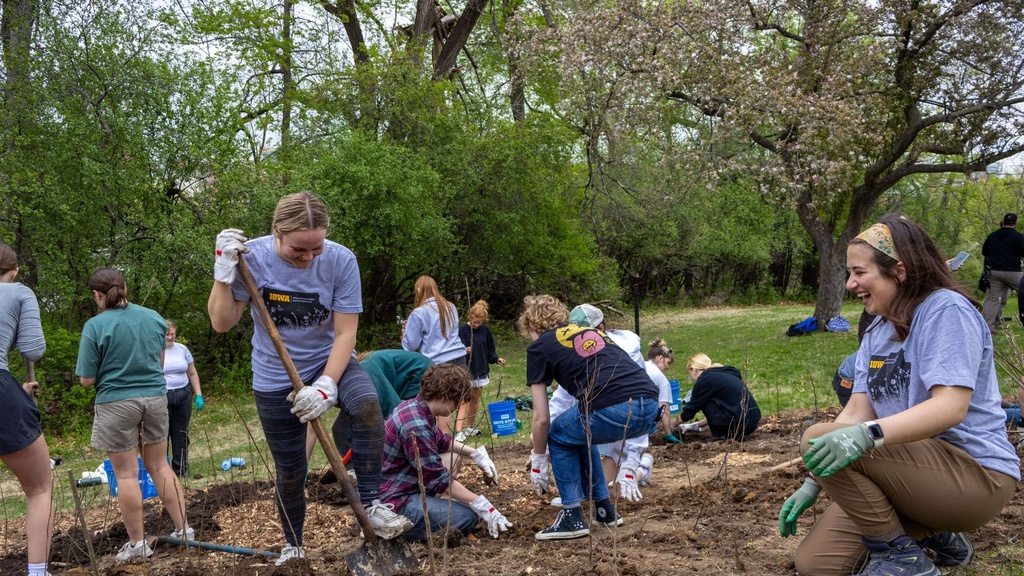
Developing Outdoor Learning Experiences
Teaching outdoors opens the door to powerful, place-based learning that deepens student inquiry, strengthens connections to course content, and fosters learner agency. Effective outdoor teaching is not simply a matter of relocating a class session, it requires intentional pedagogical design aligned with disciplinary goals, learning outcomes, and assessment strategies.
The resources below are designed to support faculty and instructors in integrating outdoor learning into their curricula. They offer practical guidance, research-informed strategies, and examples to help instructors thoughtfully design, facilitate, and assess outdoor learning experiences across disciplines.

Designing A Course
Plan Your Outdoor Experience
Clarify Purpose and Scope
- Identify course goals or learning outcomes that could be supported through place‑based or experiential learning
- Decide whether outdoor learning will be a single class session, a short sequence, or a recurring feature of your course
Choose a Place
- Identify an outdoor space or living lab aligned with your goals
- Determine if any permissions, reservations, or approvals are needed to use the space
- Visit the site in advance and consider seating, shade, accessibility, scale, and ambient noise
Design for Inquiry and Movement
- Use prompts, guiding questions, or observable phenomena
- Build in opportunities for students to move, explore, observe, collect, and ask questions
- Be open to learning paths that emerge from student curiosity and the environment
- Use movement intentionally to support attention, engagement, and transitions between activities
Match Structure to Context
- Align the session’s level of guidance with your learning goals, students' prior experience, and the characteristics of the site
- Decide where clear objectives and scaffolding are needed
- Purposefully leave space for responsive, emergent learning
Support Safe Exploration
- Set clear expectations around safety, boundaries, and respectful use of shared spaces
- Treat manageable risk and uncertainty as learning opportunities that build confidence and responsibility
- Position yourself as facilitator or co-learner when appropriate
Prepare and Communicate
- Gather supplies (e.g., clipboards, guides, equipment, digital tools)
- Set expectations such as meeting location, date and time, attire, and weather contingencies.
- Communicate expectations clearly and through numerous methods (e.g., class announcements, email reminders, syllabus, ICON, etc.
Reflect and Adjust
- Collect student feedback and reflect on what worked and what to adjust
- Iterate on future offerings based on experience
- Explore case studies from UI faculty across disciplines
- Connect practice to documented benefits of outdoor learning
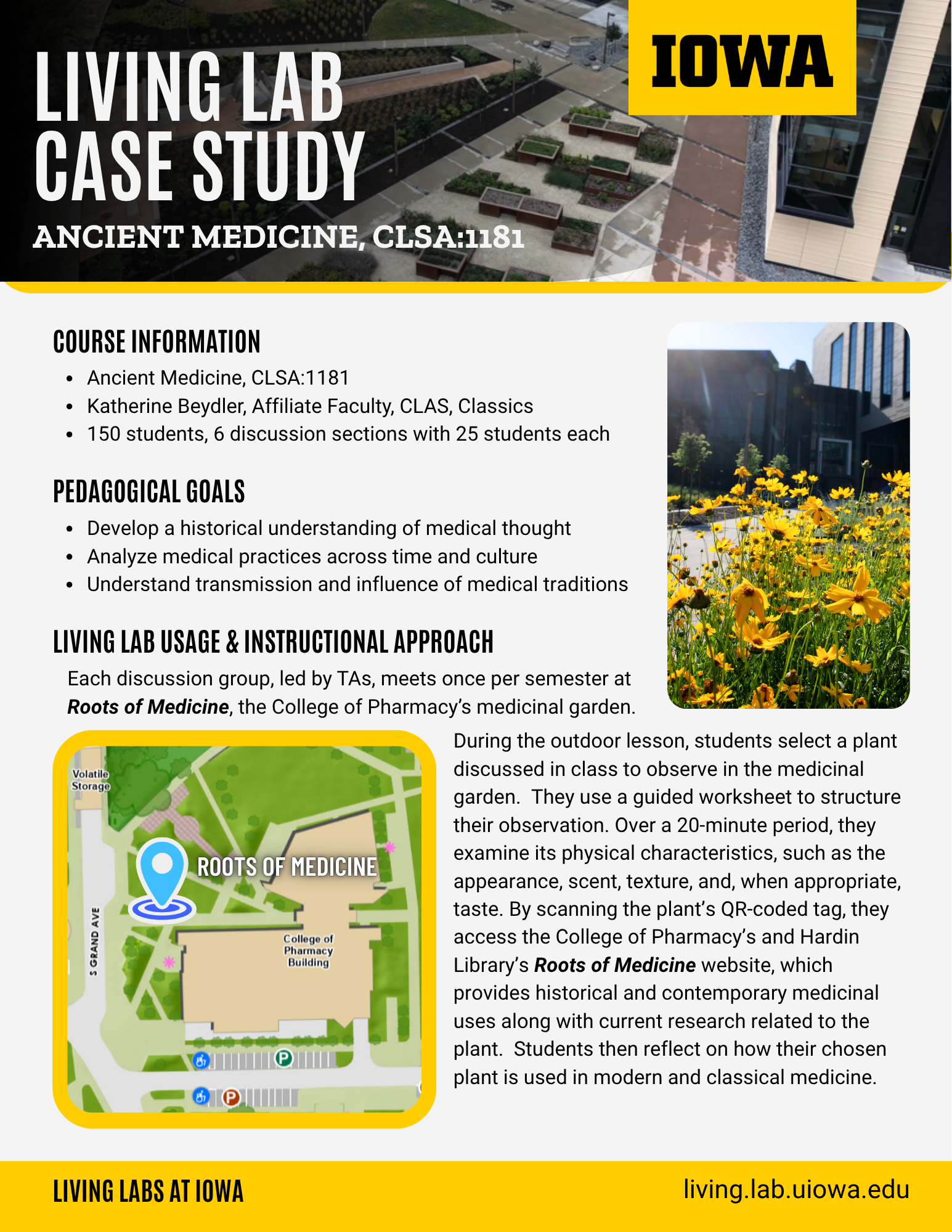
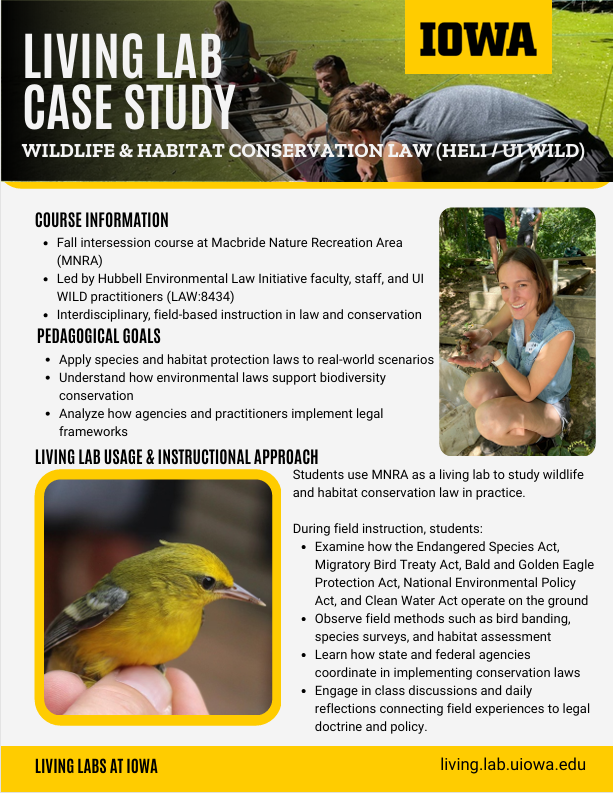
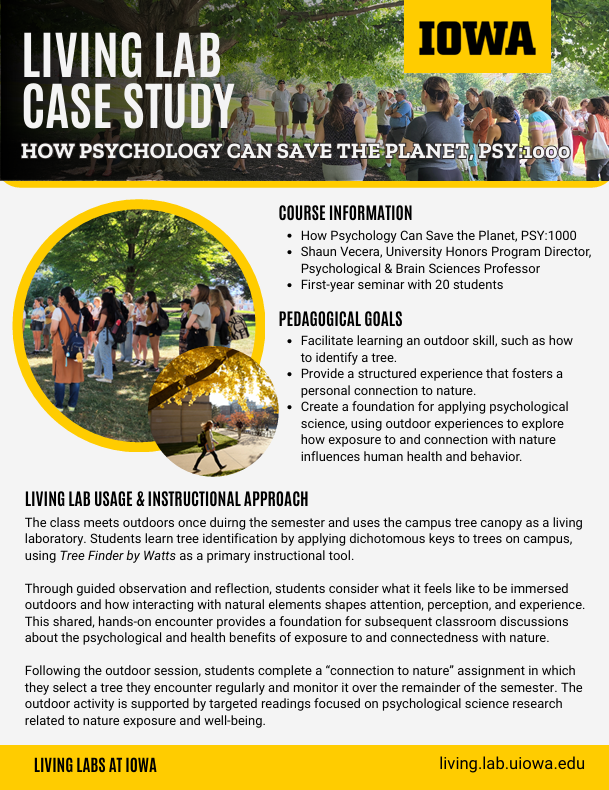
Case Studies
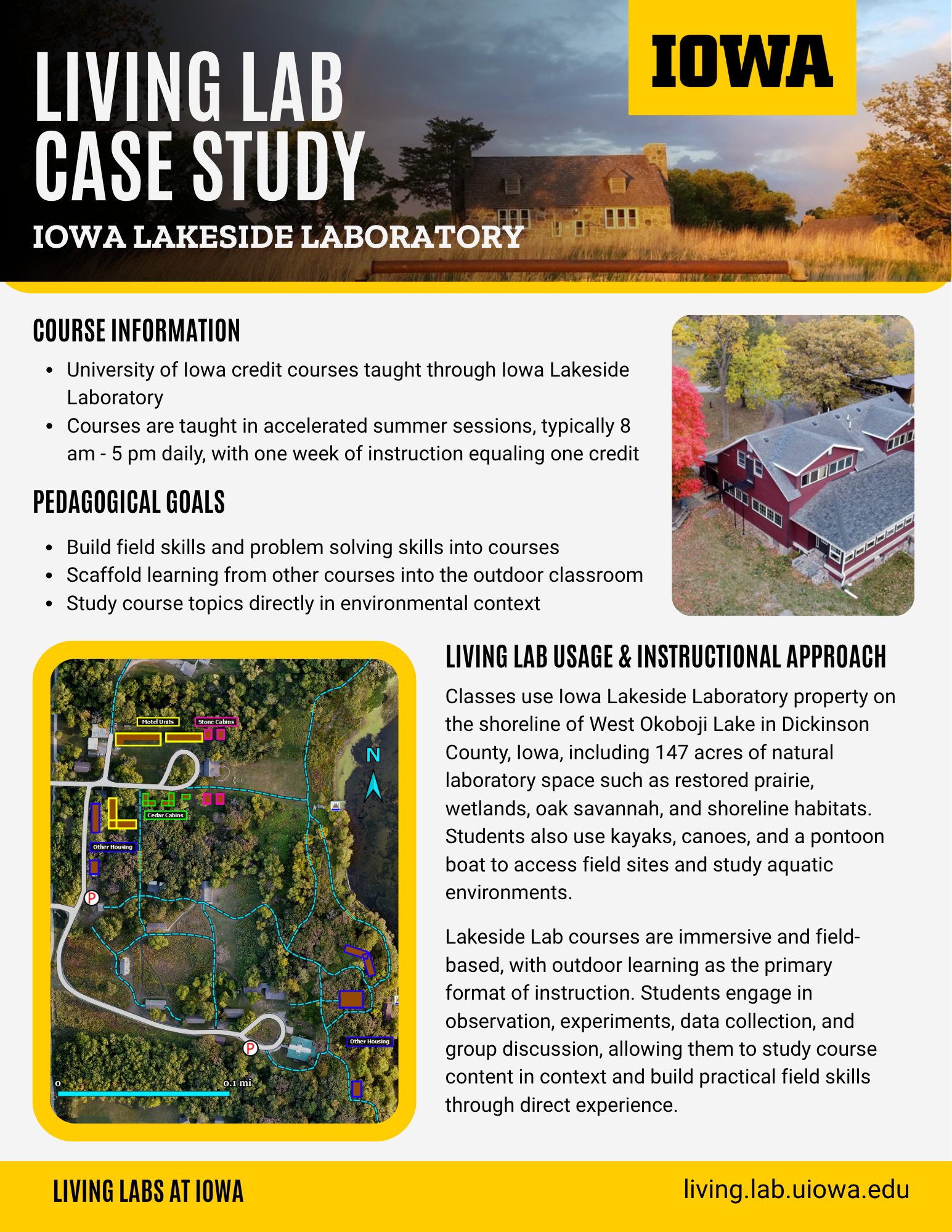
The case studies below highlight how University of Iowa faculty and instructors across disciplines are using living labs for teaching, learning, and inquiry. These examples showcase a range of approaches, from single-session outdoor activities to fully integrated, semester-long projects, demonstrating how our campus environments can function as dynamic learning spaces.

Benefits of Outdoor Learning