Living Lab Features
Below are some of the special features of this living lab that offer unique teaching, learning, and research opportunities.


What do Hawkeyes say?
"The Lagoon Shelter House is an amazing space and I would love to have more activities there to spend time outside!"
For Instructors:
This living lab provides a valuable resource for instructors at the University of Iowa and beyond to enhance their educational objectives. Our team has identified specific connections to a diverse array of academic disciplines. Instructors are encouraged to bring their students to the site to engage with these curricular linkages firsthand, fostering experiential learning. Additionally, students are invited to utilize the space for research and exploration, allowing them to deepen their understanding of the interplay between nature and their field of study.
Curricular Connections
Communications & Media
Develop a social media campaign promoting the Lagoon Shelter House as a recreation space for students and the local community.
Use student art, film, and photography to showcase events and nature experiences.
History
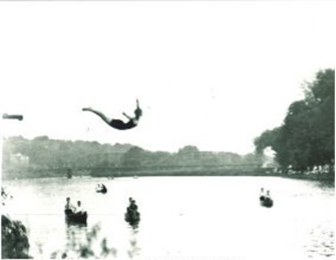
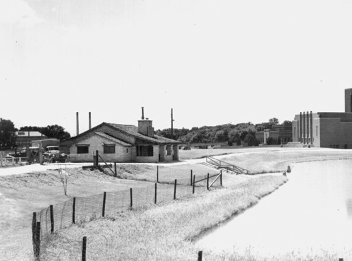
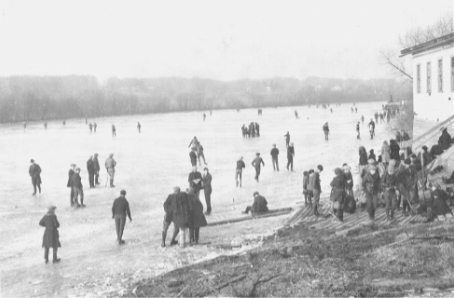
Investigate the history of outdoor recreation at the University of Iowa, comparing past and present uses of the Lagoon Shelter House.
Examine how Indigenous communities historically used the Iowa River for transportation, sustenance, and cultural practices.
Geography
Use GIS tools to analyze erosion patterns, river movement, and land use changes around the Lagoon Shelter House over time.
Assess how seasonal changes impact river recreation, creating recommendations for adapting activities throughout the year.
Research urban planning strategies that integrate green spaces and outdoor recreation areas into city landscapes.
Engineering
Propose design improvements to enhance accessibility, safety, and sustainability for the boat launch, shelter house, and surrounding areas.
Develop a winterization plan for the Lagoon Shelter House, exploring solutions extending usability.
Art, Creative Writing, & Performance Studies
Create nature-inspired poetry, photojournalism, and performance art featuring the Iowa River.
Create dye and paper using natural materials, exploring traditional methods through historical research.
Environmental Science
Conduct water quality testing in the Iowa River to monitor pollutants and assess the impact of recreational activities on the ecosystem.
Study the erosion around the boat launch and suggest control measures that could be implemented.
Explore the benefits of native plant restoration in preventing erosion, supporting pollinators, and improving biodiversity.
Public Policy
Research university policies on outdoor recreation funding and propose ways to secure long-term financial support for site maintenance.
Study local and federal policies on river conservation, assessing how the boat launch aligns with environmental regulations.
Examine the role of public-private partnerships in funding and maintaining outdoor recreation areas at universities.
Assignment Development
Discussion Questions
Why are outdoor spaces like the Lagoon Shelter House important for learning, creativity, and well-being in a university setting?
How can this site be used as a living lab to connect classroom content with real-world challenges related to the environment, community, and sustainability?
What responsibilities do we have to maintain and protect shared outdoor spaces on campus? How can students play a role?
Interpretive Prompts
- Consider the balance between natural and human-made elements here. How do they coexist and how could their dynamic be improved?
- Choose a feature of the site (the river, plants, shelter building, wildlife). What does it symbolize to you? How might others interpret it differently?
Analysis Prompts
- Investigate how the Lagoon Shelter House supports informal learning or unstructured time. What are the cognitive or social benefits of “doing nothing” in nature?
- Explore how water bodies on campus (like the river) contribute to environmental education. How could this location be used to teach about watersheds, pollution, or ecological resilience?
Testimonials

"My dream is to continue improving the activity options around the facility that give students more options for being outside near the river for improved well-being. A bouldering (rock climbing) garden will be extremely popular with our adventure community and will certainly bring more students to that area for healthy activity! I’m also hopeful that through collaborations with the Office of Sustainability and the Environment we can help develop classroom areas and activities that support the Living Learning Labs and the new School of Earth, Environment, and Sustainability."

“I would like to use the Lagoon Shelter House. It is in a really good location and I feel like it could be used for classes or as a casual hang out spot. I do not think that the University and students are taking advantage of how nice it is.”
Lagoon Shelter House Stakeholders
Click below to search a directory of caretakers, researchers, stakeholders, and people involved with Lagoon Shelter House.
Historic Photos at the Iowa River
Submit Your Feedback or Questions